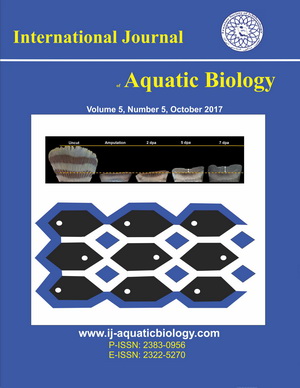
A preliminary investigation on the effects of the echinoderm Archaster typicus extract on caudal fin regeneration and heart rate of zebrafish, Danio rerio

Downloads
This study investigated the effect of the different concentrations of the crude hexanoic extract of the echinoderm, Archaster typicus, on the inherent ability of the zebrafish, Danio rerio, to regenerate its caudal fin after amputation, as well as on its heart function. The 100-ppm extract concentration showed the longest regenerated fin of 0.147 mm at 24h, 0.234 mm at 48h, and 0.598 mm at 72h. The fastest regeneration rate was at 100 ppm from 24 to 72. At 72h, the average length of fin regeneration in the negative control, 0.0 ppm (water only), and the concentrations 25 and 50 ppm were highly equivalent at 0.41 mm. The regenerated fin was longest in 100 ppm (0.6 mm) and shortest in 200 ppm (0.35 mm). After exposure to the positive control, benzaldehyde, for 72 h, the length of the regenerated fin was 0.66 mm at 25 ppm and 0.88 mm at 200 ppm. Increasing the benzaldehyde extract concentration also increased the regeneration length, with a maximum of 0.88 mm at 200 ppm. ANOVA showed significant differences in the length of the new fin among replicates, concentrations, and exposure durations. The effect of the echinoderm extract was a decrease in heart rate with increasing extract concentration and exposure duration (bradycardia).
Downloads
Ben Khadra Y., Sugni M., Ferrario C., Bonasoro F., Oliveri P., Martinez P., Candia Carnevali M.D. (2018). Regeneration in stellate echinoderms: Crinoidea, Asteroidea and Ophiuroidea. In: M. Kloc, Kubiak J.Z. (Eds.), Marine organisms as model systems in biology and medicine, Springer International Publishing. pp: 285-320.
Bos A.R., Gumanao G.S., van Katwijk M.M., Mueller B., Saceda M.M., Tejada R.L.P. (2011). Ontogenetic habitat shift, population growth, and burrowing behavior of the Indo-Pacific beach star, Archaster typicus (Echinodermata; Asteroidea). Marine Biology, 158(3): 639-648.
Bournele D., Beis D. (2016). Zebrafish models of cardiovascular disease. Heart Failure Reviews, 21(6): 803-813.
De Luca E., Zaccaria G., Hadhoud M., Rizzo G., Ponzini R., Morbiducci U., Santoro M.M. (2014). ZebraBeat: a flexible platform for the analysis of the cardiac rate in zebrafish embryos. Scientific Reports, 4(1): 4898
Dong G., Xu T., Yang B., Lin X., Zhou X., Yang X., Liu Y. (2011). Chemical constituents and bioactivities of starfish. Chemistry and Biodiversity, 8(4): 740-791.
Mah C.L. (2010). Sea stars (Asteroidea) of the Philippine Islands. The Raffles Bulletin of Zoology, Supplement 23: 139-155.
Modarresi Chahardehi A., Arsad H., Lim V. (2020). Zebrafish as a successful animal model for screening toxicity of medicinal plants. Plants, 9(10): 1345.
Peng X., Wu H., Chen H., Zhang Y., Qiu D., Zhang Z. (2019). Transcriptome profiling reveals candidate flavonol-related genes of Tetrastigma hemsleyanum under cold stress. BMC Genomics, 20(1): 687.
Sarmah S., Marrs J.A. (2016). Zebrafish as a vertebrate model system to evaluate effects of environmental toxicants on cardiac development and function. International Journal of Molecular Sciences, 17(12): 2123.
Sumitha R., Parvathi V.D., Banu N. (2017). Cytotoxicity Testing of Star Fish Stellaster equestris Extracts on Pa1 Celline. Research Journal of Pharmacy and Technology, 10(9): 2851-2856.
Sumitha R., Parvathi V.D., Banu N. (2019). Effect of sterol isolate from echinoderm Stellaster equestris on zebrafish (Danio rerio). International Journal of Pharmaceutical Sciences and Research, 10(7): 3234-3240.
Yang X.-W., Chen X.-Q., Dong G., Zhou X.-F., Chai X.-Y., Li Y.-Q., Yang B., Zhang W.-D., Liu Y. (2011). Isolation and structural characterisation of five new and 14 known metabolites from the commercial starfish Archaster typicus. Food Chemistry, 124(4): 1634-1638.
Copyright (c) 2026 International Journal of Aquatic Biology

This work is licensed under a Creative Commons Attribution 4.0 International License.